
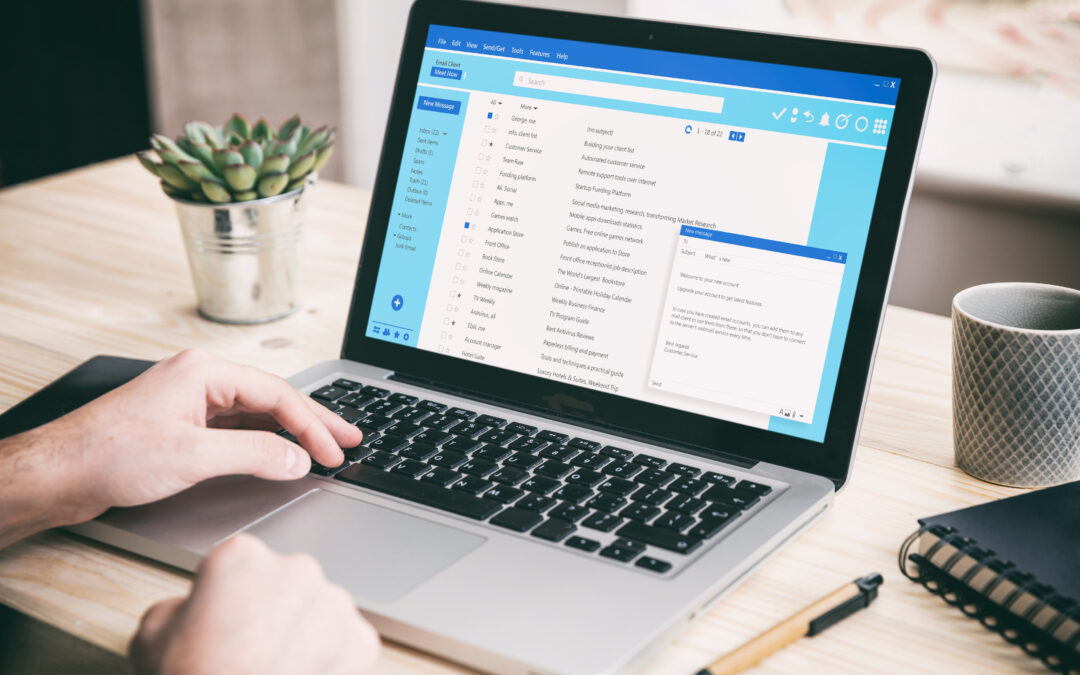
Every few years, someone declares email marketing dead. Social media killed it. Texting killed it. Algorithm changes killed it. And every few years, the data proves the obituary wrong. Email marketing for small businesses consistently delivers one of the highest returns on investment of any digital marketing channel — typically $36 to $40 for every $1 spent, according to repeated industry studies — and for small businesses that build and maintain an engaged email list, it functions as a direct, owned communication channel that no algorithm can take away.
Outreach Digital Marketing has incorporated email marketing into client campaigns for small businesses across Southern California, and we’ve watched it consistently outperform channels that receive far more attention and investment. This guide covers the case for email, what a small business email program actually looks like, and how to get started without technical complexity or a large budget.
Why Email Outperforms Social Media for Business Communication
The fundamental difference between email and social media marketing comes down to reach and ownership. When you post on Facebook or Instagram, the platform’s algorithm decides how many of your followers see that post — and in most cases, that number is between 2% and 10% of your total audience. If you want more people to see it, you pay for reach.
When you send an email to your list, that email reaches 100% of the addresses you send to (minus any deliverability issues). Your open rate — the percentage of recipients who actually open the email — typically runs between 20% and 40% for well-managed small business lists, depending on the industry. More importantly, you own the list. You’ve built it, you maintain it, and no platform change or algorithm update can make it suddenly unreachable.
Social media audiences are rented. Your email list is owned. That distinction matters enormously for a small business investing in long-term customer relationships.
What Small Business Email Marketing Actually Looks Like
Many small business owners imagine email marketing involves complex automation, elaborate templates, and professional copywriting resources they don’t have. In practice, effective small business email marketing is simpler than most people expect.
A sustainable small business email program might consist of:
A monthly newsletter: Two to four hundred words, a couple of useful pieces of information (a service tip, a seasonal reminder, a local community mention), and one clear call to action. This keeps your business top-of-mind for existing customers and drives periodic appointments or purchases without requiring a large content investment.
Promotional emails: Occasional (two to four per year) emails focused specifically on a seasonal promotion, a new service offering, or a special offer. These typically drive higher immediate response than newsletters and are worth doing when you have something genuinely worth promoting.
Automated welcome emails: A single automated email that goes to every new subscriber when they join your list, introducing your business and setting expectations. This takes fifteen minutes to set up and runs indefinitely.
Service follow-up emails: For businesses where customer relationships involve repeat visits — auto repair shops, salons, dental practices — automated reminder emails based on service date (e.g., “It’s been six months since your last service”) are straightforward to set up and consistently drive re-engagement.
Building Your Email List
You can’t send email marketing without an email list, and list-building is the first practical task in launching a program. Start with what you have:
Your existing customer database is the most valuable starting point. Any customer who has done business with you and provided their email has a reasonable expectation of hearing from you — that’s a warm audience ready to engage.
For ongoing list growth, place an email signup on your website (ideally on multiple pages), ask customers for their email address at checkout or service completion, and offer a clear value exchange: “Join our list for seasonal service tips and exclusive offers.” A small incentive — a discount on first service, a free checklist — meaningfully increases signup rates.
Choosing an Email Platform
Several platforms make small business email marketing accessible without technical expertise. Mailchimp’s free tier supports up to 500 contacts and is user-friendly enough for non-technical users. Constant Contact, Klaviyo, and ActiveCampaign offer more sophisticated features as your needs grow. Most platforms provide templates, basic automation, and analytics showing who opened and clicked your emails.
Outreach Digital Marketing manages email marketing campaigns for small businesses that want professional execution without adding it to their internal workload. We handle everything from list management and copywriting to design and performance analysis.
Call (805) 624-6646 or contact us onlineto discuss how email marketing can become one of your most reliable channels for repeat business and customer retention.
Q: How often should I email my customers?
A: For most small businesses, once or twice per month is the right frequency — enough to stay top-of-mind without becoming intrusive. Frequency above this threshold can increase unsubscribes without proportionally increasing engagement. Seasonal businesses often send more frequently during their peak season and scale back in off-season.
Q: What should I actually write in a small business email newsletter?
A: Useful, relevant information for your specific customer base. An auto repair shop might share seasonal maintenance tips. A restaurant might highlight a new menu item or an upcoming event. A home services company might offer a seasonal checklist. The test: would a customer actually want to read this? If yes, send it. If it reads like a pure promotional pitch, revise.
Q: How do I know if my email marketing is working?
A: Track open rate (benchmark is 20–40% for small businesses), click-through rate (benchmark is 2–5%), and unsubscribe rate (anything above 0.5% per email suggests content or frequency issues). More importantly, track whether email recipients schedule appointments, make purchases, or take other measurable actions at higher rates than non-subscribers.
Q: Can email marketing work for a service business that doesn’t sell products online?
A: Yes — email is particularly effective for service businesses with repeat customer relationships. The goal is staying top-of-mind between service visits, educating customers about services they may not know you offer, and driving scheduled appointments. Many of Outreach Digital Marketing’s most successful email programs are for service businesses with no e-commerce component at all.
Address: 2555 Townsgate Rd. Suite 200, Westlake Village, CA 91361
(805) 624-6646
outreachdigitalmarketing.com