
In today’s digital landscape, star ratings and customer reviews play a major role in how people choose a business. Many consumers still glance at the number of stars first because it offers a quick way to compare options. A higher rating can create a strong first impression, while a lower rating may cause hesitation.
However, that first impression is no longer enough to guide a decision. In 2026, customers are looking beyond the rating itself and focusing on the details behind it. They want to understand what actually happened during someone else’s experience, not just see a score.
The written content within reviews now carries more weight than ever. It helps potential customers evaluate service quality, reliability, communication, and overall value. Instead of relying on a number, people are taking the time to read, compare, and form a more complete picture before making a choice.
What Are Star Ratings and Why They Are Not Enough
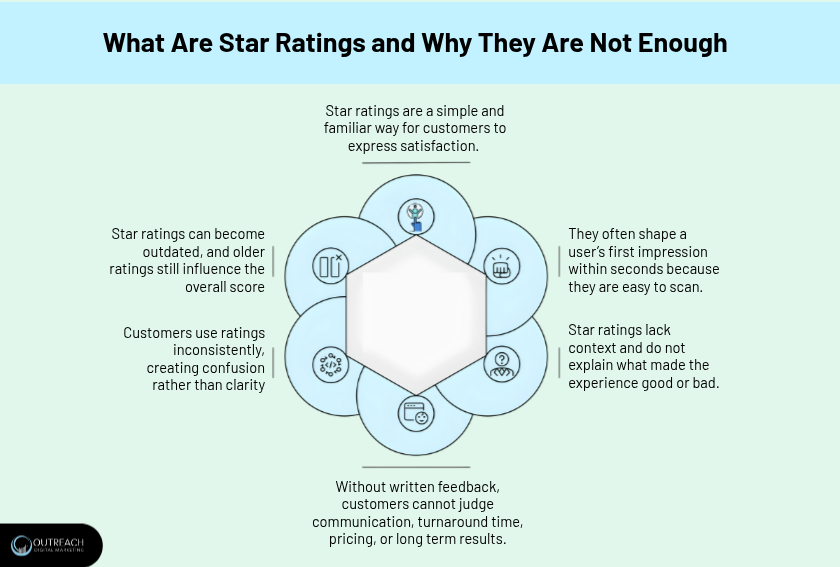
Star ratings provide a simple and familiar way for customers to express their satisfaction. A five star rating typically reflects a positive experience, while a lower rating signals dissatisfaction. Because they are easy to scan, star ratings often shape a user’s first impression within seconds.
The problem is that star ratings lack context. They do not explain what specifically made the experience good or bad. A business may have a high overall rating, but without written feedback, there is no way to understand whether customers were satisfied with communication, turnaround time, pricing, or long term results.
There are also inconsistencies in how customers use ratings. Some people leave five stars for average service, while others reserve five stars only for exceptional experiences. In some cases, customers leave a low rating without any explanation, which creates confusion rather than clarity.
Star ratings can also become outdated. A business may improve its processes, staff, or service quality over time, but older ratings still influence the overall score. Without recent and detailed feedback, potential customers are left guessing whether the current experience matches the rating they see.
Because of these limitations, star ratings alone do not provide enough information for someone to make a confident decision.
Why Review Content is More Helpful
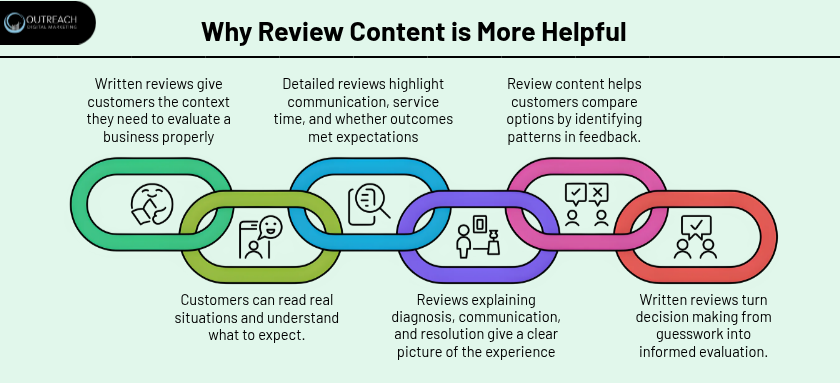
Written reviews give customers the context they need to evaluate a business properly. Instead of relying on a number, they can read about real situations and understand what to expect.
Detailed review content often highlights specific aspects of the experience, such as how clearly the business communicated, how long the service took, and whether the outcome met expectations. These insights help potential customers determine whether a business aligns with their needs.
For example, a review that explains how a problem was diagnosed, how the team communicated throughout the process, and how the issue was resolved provides a clear picture of what working with that business is like. That level of detail is far more useful than a simple five star rating with no explanation.
Review content also helps customers compare options more effectively. Instead of choosing based on the highest rating, they can look for patterns in feedback and identify which business consistently delivers the type of experience they are looking for.
In this way, written reviews move the decision making process from guesswork to informed evaluation.
Builds Trust
Trust is built through transparency and consistency. When potential customers read multiple reviews that describe similar positive experiences, it reinforces the idea that a business is reliable and delivers on its promises.
Detailed reviews allow people to see how a business handles both routine services and unexpected issues. When customers mention clear communication, fair pricing, and problem resolution, it creates confidence in the overall experience.
On the other hand, a high star rating without supporting detail can feel uncertain. Customers may question whether the rating reflects real experiences or if important information is missing. This is especially true when reviews are short, vague, or inconsistent.
Review content also humanizes a business. It shows how real people were treated and how situations were handled. This makes it easier for potential customers to relate and feel more comfortable moving forward.
Over time, consistent and detailed feedback creates a strong foundation of trust that goes far beyond what a numerical rating can achieve.
Supports Search Visibility
Review content plays an important role in how search engines understand and rank a business. The language used in customer reviews often includes natural phrases related to services, locations, and specific experiences.
This type of content helps search engines connect a business with relevant searches. For example, when customers describe services in their own words, they often include terms that other users are searching for. This creates additional opportunities for a business to appear in search results without relying solely on website content.
Review content also signals that a business is active and engaged with its customers. A steady flow of new, detailed reviews shows ongoing interaction and relevance, which can support visibility over time.
In addition, when businesses respond to reviews, it adds another layer of useful content. Responses can reinforce key services, clarify details, and demonstrate professionalism, all of which contribute to a stronger online presence.
Together, these factors make review content an important part of both credibility and search performance.
Why Businesses Should Focus on Review Content
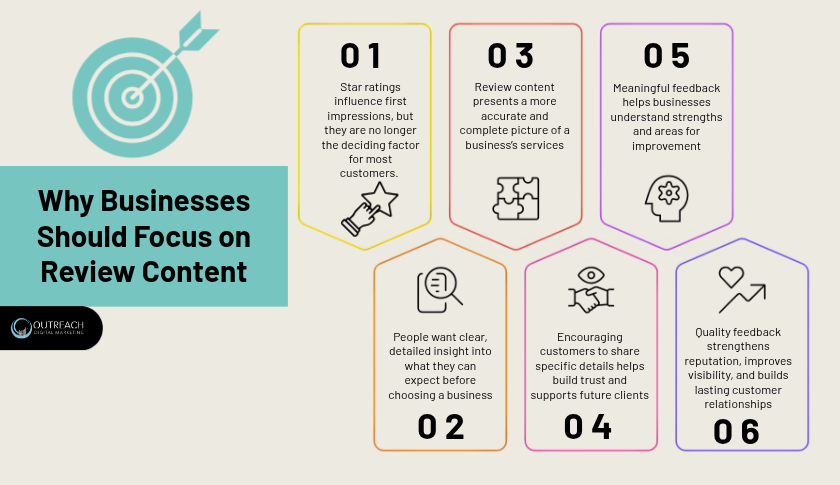
While star ratings still influence first impressions, they are no longer the deciding factor for most customers. People want clear, detailed insight into what they can expect before choosing a business.
Focusing on review content allows businesses to present a more accurate and complete picture of their services. Encouraging customers to share specific details about their experience helps build trust and provides valuable information for future clients.
Businesses that prioritize meaningful feedback also gain a better understanding of their strengths and areas for improvement. This creates opportunities to refine their processes and deliver a more consistent experience over time.
At Outreach Digital Marketing, we help businesses develop strategies that highlight real customer experiences and turn review content into a long term asset. By focusing on quality feedback instead of just ratings, businesses can strengthen their reputation, improve visibility, and build lasting relationships with their customers.